

The Messy Biological Reality of Human Fertility
Wondering what is fertility when you strip away all the medical jargon? When people talk about it, they usually picture a clean, straightforward switch. Sperm meets egg, pregnancy happens, right? Well, if building a family were that simple, fertility clinics wouldn’t be packed out, and entire internet rabbit holes wouldn’t exist dedicated to tracking ovulation strips.
At its core, fertility is simply a person’s natural capability to conceive and produce offspring. But biologically speaking? It’s a high-stakes, tightly coordinated marathon that has to go off without a hitch every single month. It requires a seamless dance of hormones, healthy reproductive organs, and frankly, a bit of good timing. Whether you’re actively trying to conceive right now or just trying to figure out how your own body works, looking past the dry textbook definitions reveals a surprisingly complex ecosystem.
What Is Fertility? (Direct Answer)
Fertility is the biological ability to conceive a child through sexual reproduction. For women and people with uteruses, it relies on ovulation-the release of a mature egg-and a healthy uterine environment. For men and people with testes, it requires the production of healthy, mobile sperm. Conception happens when a single sperm successfully fertilizes an egg, which then travels and implants in the uterine lining.
How Reproduction Actually Works: The Step-by-Step Breakdown
To really grasp fertility, you have to look at the timeline of a typical cycle. It’s not just about what happens on day fourteen; it’s a month-long project your body quietly runs in the background.
- The Hormonal Buildup: Your brain’s hypothalamus and pituitary gland release signaling hormones (FSH and LH) that tell the ovaries to mature an egg inside a fluid-filled sac called a follicle.
- Ovulation: Around the middle of the cycle, a sharp surge in luteinizing hormone (LH) triggers the ovary to rupture and release that mature egg into the fallopian tube.
- The Migration: The egg has a notoriously short shelf life-usually just 12 to 24 hours once released. It slowly drifts down the fallopian tube, waiting for company.
- The Race: During intercourse, millions of sperm are released, but only a fraction make the grueling journey up the uterus and into the fallopian tube. Because sperm can hang out in the female reproductive tract for up to five days, your “fertile window” actually opens before ovulation even occurs.
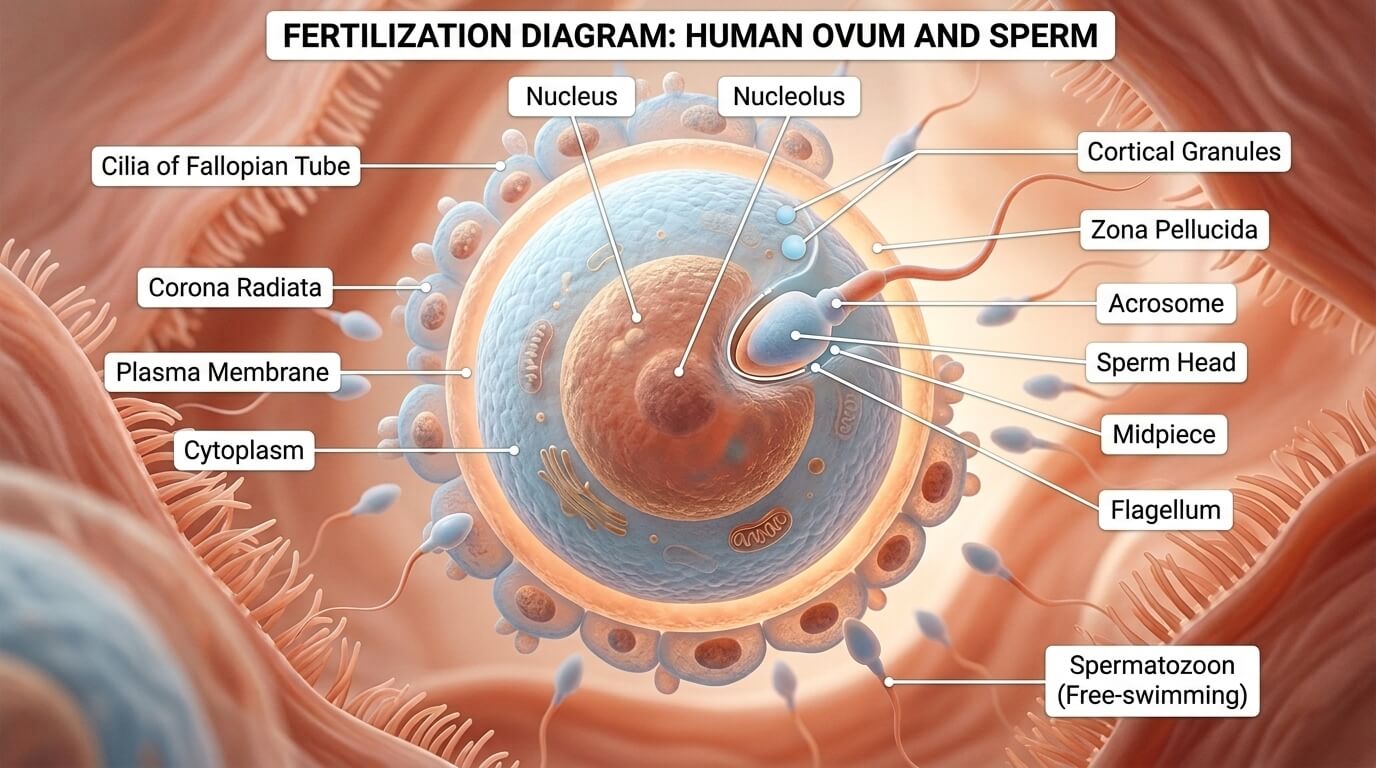
- Fertilization and Implantation: If a sperm manages to penetrate the egg, their genetic material merges. This newly formed embryo travels down into the uterus over the next several days, looking for a cozy, thick uterine lining to burrow into and establish a pregnancy.

Key Factors That Impact Fertility
Your reproductive health doesn’t exist in a bubble. Genetics certainly play a massive role, but daily habits, age, and environment heavily influence your baseline fertility score.
1. The Age Factor (The Biological Clock)
Like it or not, age remains the single biggest predictor of fertility.
- For Women: You’re born with all the eggs you’ll ever have (around 1 to 2 million), and that number drops to about 300,000 by puberty. Quality starts to noticeably dip after age 35, making chromosomal hiccups more common.
- For Men: Men produce sperm continuously, but quality, motility, and volume also slide downward steadily after age 40 or 45, which can bump up the risk of genetic mutations in offspring.
2. Lifestyle and Environmental Triggers
What you put into your body-and what floats around in your environment-matters a lot more than we often care to admit.
- Smoking and Alcohol: Smoking actively damages DNA in eggs and tanks sperm counts. Heavy drinking loves to throw your delicate hormone production out of whack.
- Weight Extremes: Both being underweight (which can flat-out shut down ovulation) and being overweight (which sparks insulin resistance and hormonal chaos) make conception significantly harder.
- Environmental Toxins: Long-term exposure to heavy metals, pesticides, and endocrine-disrupting chemicals (think BPA) can quietly mess with your endocrine system.
Common Myths vs. Realities About Fertility
Let’s clear the air for a second. Pop culture, family lore, and old wives’ tales have given us some deeply flawed ideas about how getting pregnant actually works.
- Myth:If you have regular periods, you are 100% fertile.
- Reality: Regular periods usually mean you’re ovulating, but they don’t guarantee good egg quality, open fallopian tubes, or a cooperative uterine lining.
- Myth:Infertility is almost always a “women’s issue.”
- Reality: Roughly one-third of infertility cases stem from female factors, one-third from male factors, and the remaining third are a mix of both or completely unexplained. It takes two to tango, literally.
- Myth:Just relax, and it’ll happen.
- Reality: While high stress can delay ovulation or tank your libido, stress alone rarely causes outright infertility. Telling someone struggling with infertility to “just relax” is basically pouring salt in a wound.
Frequently Asked Questions
What is the difference between fertility and infertility?
Fertility is your natural biological capacity to conceive a child. Infertility is a clinical diagnosis defined as the inability to achieve pregnancy after one full year of unprotected, regular intercourse (or six months if the female partner is 35 or older).
When is a woman’s most fertile window?
A woman is most fertile during her “fertile window,” which includes the day of ovulation and the five days leading up to it. This happens because sperm can survive inside the reproductive tract for up to five days, while an egg only lives for about 24 hours after release.
Can men actively improve their sperm health?
Yes, absolutely. Men can improve sperm quality by exercising regularly, quitting smoking, cutting back on alcohol, avoiding hot tubs or tight underwear that overheat the testicles, and eating a diet rich in antioxidants like Vitamin C, E, and zinc.
Does birth control permanently damage fertility?
No, it doesn’t. Hormonal birth control (like the pill, patch, or hormonal IUD) temporarily pauses ovulation or thickens cervical mucus, but it clears your system rapidly. Once you stop taking it, most people bounce back to their baseline natural fertility within a few weeks or months.
How common is infertility?
Infertility is way more common than people talk about. According to the World Health Organization (WHO), roughly 1 in 6 people globally experience infertility during their lifetime. It’s a widespread medical reality, not a personal failure.
What are the first signs that something might be wrong with my fertility?
Irregular or missing periods, painful pelvic cramps, a history of sexually transmitted infections (STIs), or trying to conceive for over a year without success are the most common early red flags that it’s worth booking a chat with a reproductive specialist.
Conclusion
Understanding what fertility means goes way beyond basic biology-it’s about tuning into your body and realizing just how many moving parts have to align for conception to happen. Whether you’re planning for kids down the road or trying to figure out your next steps right now, knowing the realities, timelines, and risk factors puts you firmly back in the driver’s seat of your health.
Want to Learn More About Your Personal Reproductive Health?
Whether you’re planning for the future or navigating your fertility journey, taking proactive steps starts with reliable information and expert guidance.Schedule a Consultation →

Leave a Reply