

Ovulation Explained: What Is the Fertility Window?
Ovulation is the biological process where a mature ovary releases an egg into the fallopian tube, where it becomes available for fertilization. This single event is the anchor of your entire reproductive cycle. Usually happening once per menstrual cycle-roughly midway through-ovulation dictates whether pregnancy is possible during a given month. Understanding this mechanism is the ultimate key to taking charge of your reproductive health, whether you are trying to conceive, avoiding pregnancy, or simply curious about how your body works.
Direct Answer: What Happens During Ovulation?
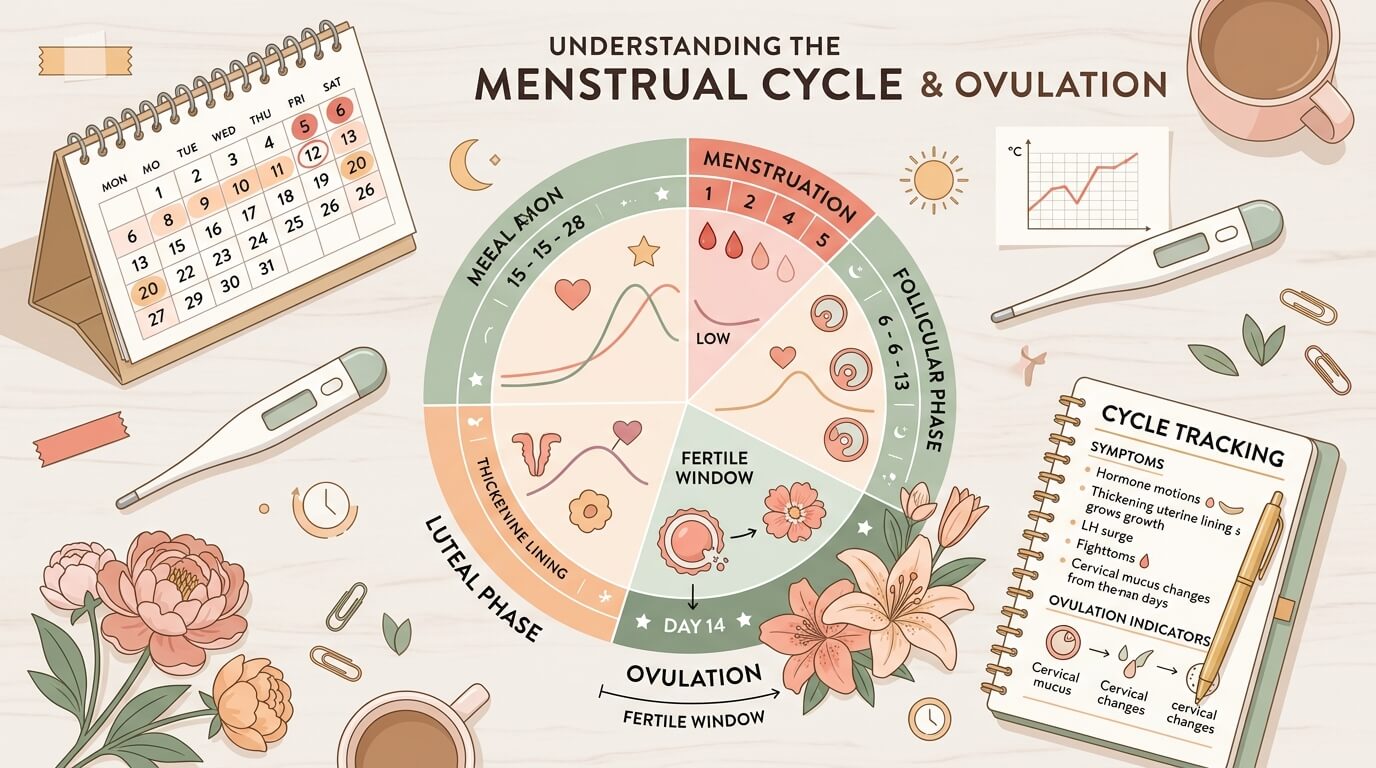
Ovulation occurs when a surge in luteinizing hormone (LH) triggers a mature follicle on the ovary to rupture and release an egg. This egg survives for roughly 12 to 24 hours. Because sperm can live inside the female reproductive tract for up to five days, your fertile window actually spans about six days: the five days leading up to ovulation and ovulation day itself.
The Biological Breakdown: How the Cycle Works
To truly grasp ovulation, you have to look at the big picture of the menstrual cycle. A standard cycle lasts anywhere from 21 to 35 days, with day one being the first day of your period.
Phase 1: The Follicular Phase
This phase starts on day one of your period. Your brain’s hypothalamus signals the pituitary gland to release follicle-stimulating hormone (FSH). FSH stimulates your ovaries to produce tiny sacs called follicles, each containing an immature egg. Usually, only one follicle becomes dominant, maturing while the rest dissolve.
Phase 2: The Ovulatory Phase
As the dominant follicle grows, it triggers a sharp rise in estrogen levels. This estrogen spike tells your brain to release a massive wave of LH. This LH surge is the ultimate trigger, causing the follicle to break open and release the egg within 24 to 36 hours.
Phase 3: The Luteal Phase
After the egg is released, the empty follicle transforms into a structure called the corpus luteum. This powerhouse starts producing progesterone, a hormone designed to thicken and prepare the uterine lining for a fertilized egg. If pregnancy doesn’t happen, the corpus luteum breaks down, progesterone levels drop, and your period begins, restarting the cycle.
How to Tell When You’re Ovulating: Key Signs and Symptoms
Your body drops plenty of hints when it’s gearing up for ovulation. Learning to tune into these physical cues can tell you a lot about your internal rhythm.
- Cervical Mucus Changes: Right before ovulation, estrogen causes your cervical mucus to change consistency. It becomes clear, stretchy, and slippery-resembling raw egg whites. This specific texture helps sperm swim efficiently toward the egg.
- Basal Body Temperature (BBT) Shifts: Your resting body temperature drops slightly right before ovulation and spikes right after. Tracking this daily with a basal thermometer can confirm ovulation has already occurred.
- Mittelschmerz (Ovulation Pain): Roughly 20% of women feel a dull ache or sharp twinge on one side of the lower abdomen during ovulation. It’s totally normal and corresponds to the ovary releasing the egg.
- Libido Boost: Nature has a funny way of encouraging reproduction. Many women notice an uptick in sexual desire right around their fertile window.
- Light Spotting or Discharge: A minor drop in estrogen mid-cycle can occasionally trigger light spotting.
Real-World Scenario: Putting Tracking Into Practice
Take Sarah, for example. She tracked her cycle length for three months using a calendar app, noticing her cycles averaged 28 days. Based on the math, she assumed she ovulated strictly on day 14.
However, after a few months of negative pregnancy tests while trying to conceive, she started tracking her cervical mucus and using over-the-counter ovulation predictor kits (OPKs). To her surprise, her LH surge didn’t happen until day 17. By adjusting her timeline to match her body’s actual signals rather than a textbook 28-day average, she finally aligned her efforts with her true fertile window.
Common Myths and Mistakes About Ovulation
Misinformation about fertility is everywhere. Let’s clear up a few persistent myths:
- Myth: Everyone ovulates on day 14. Reality: Day 14 is just an average for a textbook 28-day cycle. If your cycle is 32 days, you likely ovulate around day 18. Every body has its own unique timeline.
- Myth: You can only get pregnant on the exact day you ovulate. Reality: Because sperm can survive inside the body for up to five days, having intercourse in the days leading up to ovulation carries a high chance of pregnancy.
- Myth: You can’t get pregnant during your period. Reality: While less common—especially with short cycles—sperm can live long enough to fertilize an egg released shortly after a quick period ends.
- Mistake: Relying entirely on apps. Reality: Period apps use math algorithms, not biological data. They can guess your fertile window, but they can’t see your hormone shifts or cervical mucus.
Frequently Asked Questions (FAQ)
1. How long does an egg live after ovulation?
An unfertilized egg survives for only 12 to 24 hours after being released. If it doesn’t meet sperm during this window, it dissolves and is reabsorbed by the body.
2. Can you ovulate twice in one cycle?
Yes, but not at different times. If a woman releases two eggs, it happens within a 24-hour window. This is how fraternal twins are conceived.
3. Do irregular periods mean I am not ovulating?
Not necessarily, but it makes tracking much harder. Irregular cycles can mean ovulation is delayed, unpredictable, or occasionally absent (anovulation). Consulting a doctor is best if your cycles vary wildly.
4. How do Ovulation Predictor Kits (OPKs) work?
OPKs detect the surge in luteinizing hormone (LH) in your urine, which typically happens 24 to 36 hours before ovulation occurs, giving you a heads-up on your most fertile days.
5. Does stress delay ovulation?
Absolutely. High stress floods your body with cortisol, which can interfere with the brain signals that trigger the release of reproductive hormones, ultimately pushing ovulation back.
6. Can you feel when you ovulate?
Some people experience “Mittelschmerz,” a mild cramping or twinge on one side of the lower abdomen, while others feel no physical symptoms at all.
Conclusion: Tuning Into Your Body’s Rhythm
Ovulation is much more than just a box to check on the path to pregnancy—it’s a vital sign of overall hormonal health. Whether you’re actively trying to conceive or simply want to understand why your mood, energy, and body change throughout the month, tuning into your fertile window offers profound insight. Start small: pay attention to your body’s physical cues, keep track of your cycles, and remember that every body operates on its own unique schedule.

Leave a Reply